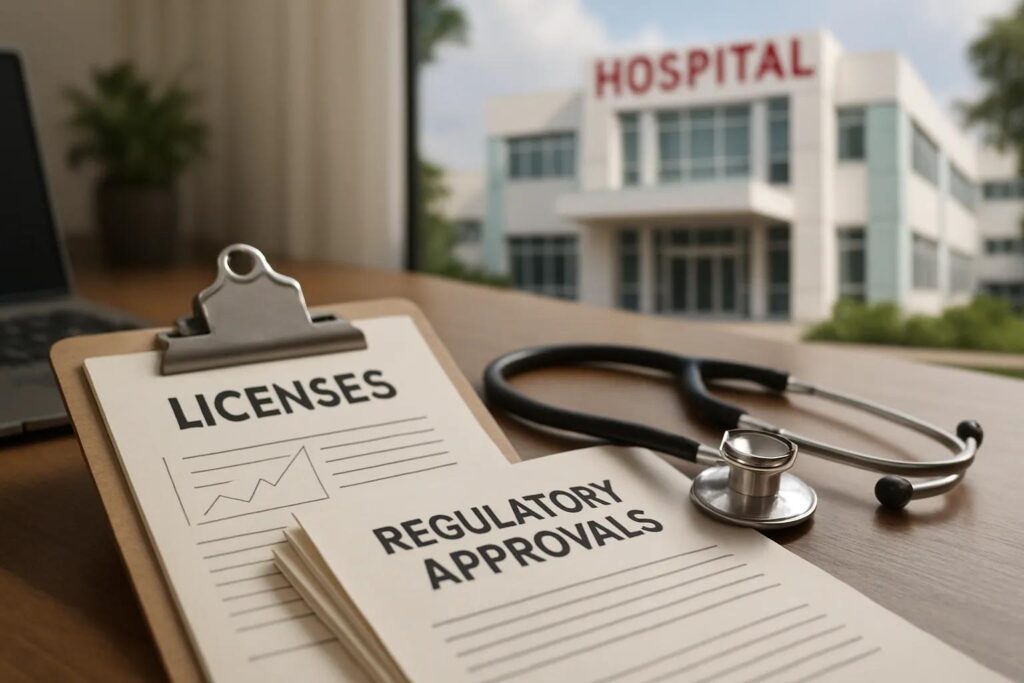
Establishing a business in the hospitality or healthcare sector requires navigating a multi-layered licensing framework involving local, state, and central authorities. From trade licenses and fire safety approvals to pollution control and health department permissions, each approval plays a critical role in ensuring that the business operates legally and safely. Many founders underestimate this complexity and assume that basic registration is sufficient, which often leads to gaps in compliance.
In reality, the licensing journey is highly process-driven and requires proper planning, sequencing, and documentation. Without a clear roadmap, businesses may face repeated queries, application rejections, or unexpected delays. A structured, end-to-end approach helps streamline approvals, reduce uncertainty, and ensures that the business is fully compliant from day one.
Many founders believe that once a business is registered, compliance is mostly taken care of. But in 2026, the real challenge lies in managing compliance through an End-to-End Licensing Playbook, where even small gaps can turn into major risks if ignored.
Key Hidden Compliance Risks
– Lack of clarity on required licenses for specific business types
– Applying for approvals without proper sequencing
– Documentation errors leading to rejections or delays
– Overlooking renewals and validity timelines
Why These Risks Matter
Licensing delays can directly impact your business launch, revenue timelines, and operational readiness. In regulated sectors like hospitality and healthcare, non-compliance can also lead to penalties, legal notices, or temporary shutdowns.
Beyond legal implications, incomplete licensing affects credibility with customers, investors, and regulatory bodies. It creates uncertainty and can slow down expansion plans in the future.
The Right Approach
A strategic licensing approach begins with identifying all applicable approvals based on your business model and location. This is followed by preparing accurate documentation, applying in the correct sequence, and actively coordinating with different authorities.
With expert guidance and a well-defined process, businesses can significantly reduce approval timelines, avoid unnecessary complications, and focus on growth rather than compliance challenges.
“Licensing is not just paperwork—it’s a process that defines how smoothly your business starts and scales. A clear roadmap can turn approvals from a bottleneck into a strategic advantage.”